
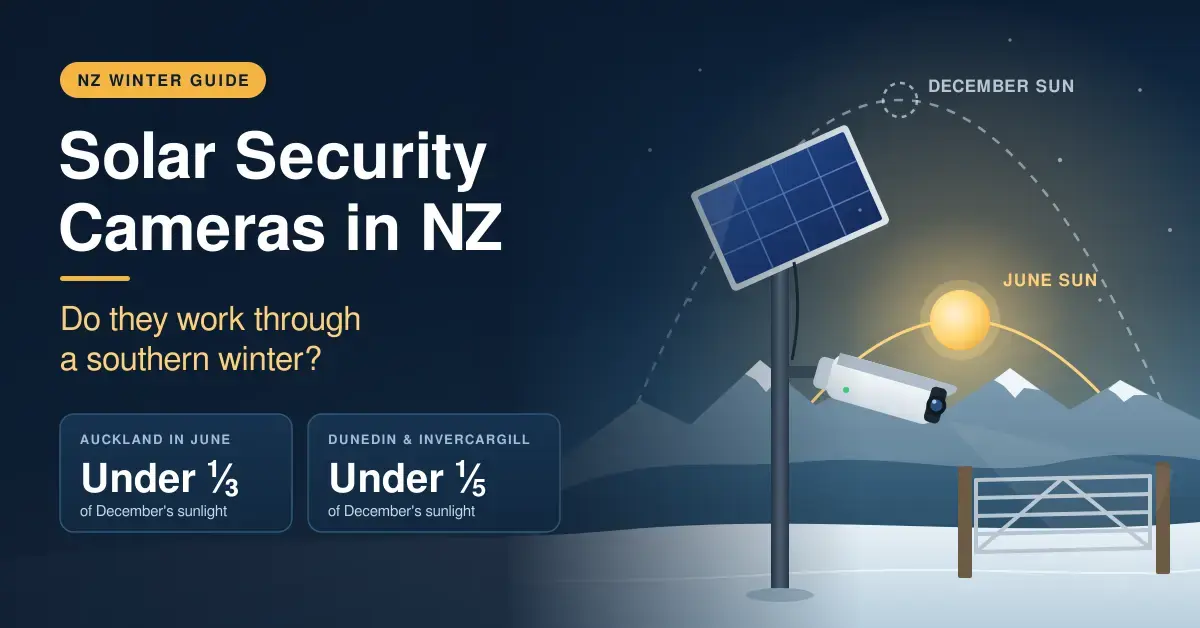
Securing the exterior perimeter of your property across Aotearoa New Zealand has taken a massive technological leap forward as sustainable smart home ecosystems become the standard baseline for domestic safety. For generations, traditional residential property defense relied on complex, hardwired analog closed-circuit television (CCTV) systems that required invasive structural drilling through internal framing, extensive cabling routes, and expensive professional electrical installation fees. The modern digital era has completely re-engineered this landscape, with the premium wire-free solar security camera nz marketplace leading the charge in high-performance, self-sustaining perimeter monitoring.
By combining advanced low-power wireless data pipelines with state-of-the-art optical sensors, localized artificial intelligence edge computing, and continuous solar energy harvesting, these sophisticated surveillance systems allow everyday property owners to deploy an elite defense grid across their section in under an hour. Whether you are aiming to track delivery couriers on a rainy afternoon in Auckland, protect an isolated tool shed on a rural lifestyle block in Hamilton, or keep a watchful eye on a family holiday bach nestled in the Marlborough Sounds, investing in a high-quality solar powered security camera nz network delivers unparalleled visual clarity and long-term peace of mind.
Navigating this rapidly expanding market requires a comprehensive understanding of lens resolution metrics, solar panel efficiency, cloud subscription tiers versus local storage choices, dynamic battery preservation, and the specific structural placement points that maximize winter performance within local New Zealand conditions.

- Continuous Off-Grid Autonomy: Eliminates manual battery recharging routines entirely by harvesting clean, natural energy from the sky.
- 100% Wire-Free Architecture: Removes expensive professional sparky installation fees by utilizing internal lithium-ion batteries and local Wi-Fi transmitters.
- Evidence-Grade Image Quality: Captures critical environmental identifiers cleanly with advanced resolution options scaling up to premium 4K ultra-high definition.
- Intelligent Local Edge AI: Employs advanced on-device neural processing to accurately separate passing street cars, neighborhood pets, delivery packages, and genuine human targets.
- Zero Ongoing Subscriptions: Offers robust local storage frameworks via secure base stations or microSD arrays to completely eliminate mandatory monthly cloud platform surcharges.
Understanding the Solar Security Camera NZ Landscape
The rapidly changing dynamics of the residential security market across New Zealand have driven a massive consolidation in how homeowners approach property protection. In past retail cycles, security setups were largely reactive, relying on basic alarm sensors that merely screamed out after a window had already been smashed or a door forced open. Modern homeowners demand proactive visual deterrence, steering the market decisively toward external camera arrays that flag an intruder the absolute second they cross a boundary line. High-performing solar-powered surveillance units serve as an effective psychological shield, warning opportunistic bad actors that their clothing descriptions, facial dimensions, and vehicle registration numbers are being actively recorded in high definition. This immediate visual tracking prevents crimes of opportunity before they escalate into costly break-ins.
As network speeds across New Zealand have surged following the near-universal rollout of Ultra-Fast Broadband (UFB) fibre and high-capacity 5G cellular arrays, wireless cameras have achieved parity with traditional commercial wired installations. The modern generation of hardware doesn’t just broadcast video; it functions as a comprehensive, internet-connected automated safety bubble that seamlessly updates across your mobile device wherever you travel in the world. For landlords protecting urban tenancies or remote bach owners tracking properties through severe winter weather, the ability to open a clean smartphone app and view real-time, low-latency live streams has completely rewritten the playbook for property risk mitigation. Finding the best solar security camera nz for your situation requires balancing upfront hardware costs against the physical layout of your land.
| Deployment Model Criteria | Wire-Free Solar Security Networks | Hardwired PoE Commercial Systems |
|---|---|---|
| Initial Structural Installation Cost | Extremely low; basic DIY bracket mounting | High; demands professional electrical routing |
| Physical Modification to Property | None; perfect for local renters and townhouses | Substantial; requires structural drilling and conduits |
| Data Transmission Pipeline | Local dual-band Wi-Fi or mesh radio streams | Physical Cat6 copper networking cables |
| Power Interruption Resilience | High; unaffected by temporary localized grid cuts | Reverse backup dependent; relies on UPS battery blocks |
| Continuous Recording Capabilities | Low; heavily optimized for motion event clips | High; supports non-stop round-the-clock storage |
Turning Raw Sunlight into Permanent Property Protection
The primary benefit of deploying a solar-powered hybrid surveillance system is the total elimination of maintenance downtime. Standard battery-powered wireless cameras are highly efficient, but they still require homeowners to regularly scale ladders every few months, detach the hardware, and bring the units indoors to charge via a USB wall adapter plug overnight. During those charging hours, your property line sits completely exposed with significant blind spots. Integrating a monocrystalline micro-solar panel ensures your camera cells receive a continuous trickle charge throughout the daytime hours, maintaining a permanent 100% battery reserve without human intervention.
Key Hardware Specifications and Suction Metrics Decoded
When browsing through technical specification sheets on local e-commerce sites or retail shelves at major appliance centers, the sheer volume of jargon can quickly become overwhelming for the average consumer. To make an informed choice that delivers genuine utility, you must cut through the basic marketing fluff and focus explicitly on core hardware metrics. The primary indicator of a camera’s ultimate evidence-gathering performance is the combination of its lens aperture, sensor dimensions, and native horizontal resolution profile. These mechanical elements directly dictate whether your recorded video clips will capture sharp, actionable identifiers or merely render a blurry, useless silhouette.
Beyond raw optical performance, the responsiveness of the motion activation matrix is what separates premium smart security gear from budget generic alternatives. Older legacy systems rely on crude software pixel shifts to trigger a recording, meaning a passing cloud shadow or a gust of wind blowing through a feijoa tree will spam your phone with false alerts. Modern systems integrate high-performance Passive Infrared (PIR) heat sensors coupled with specialized computer vision processors. This ensures the unit stays in an ultra-low-power sleep state, waking up to capture crystal-clear evidence within mere milliseconds only when a genuine thermal body signature crosses its field of view.
- Aperture Width: Look for wide F/1.4 to F/1.6 apertures that capture maximum ambient light for superior low-light performance.
- Field of View: Aim for wide-angle lenses between 130 and 180 degrees to maximize your total perimeter coverage footprint.
- High Dynamic Range (HDR): Ensures the sensor balances extreme sunlight highlights and deep porch shadows within the exact same frame.
Optical Resolution and Digital Zoom Capabilities
Opting for an advanced resolution framework like 2K or 4K is absolutely paramount if you need to read vehicle license plates or identify facial features at a distance. A standard 1080p sensor lacks the pixel density required to preserve clarity under digital magnification, rapidly turning distant numbers or faces into a blocky mess. Investing in a premium 4K lens provides an expansive digital canvas, allowing local authorities to zoom deep into an image frame to pull clean, un-compromised photographic evidence during a property investigation.
| Optical Specification Level | Pixel Resolution Canvas | Digital Magnification Limit | Actionable Identification Range |
|---|---|---|---|
| Standard 1080p Full HD | 1920 x 1080 (2.0 Megapixels) | Up to 3x Zoom before pixelation | Safe tracking up to 3.5 Metres from lens |
| Advanced 2K QHD Target | 2560 x 1440 (4.0 Megapixels) | Up to 6x Zoom before distortion | Clean verification up to 6.0 Metres from lens |
| Premium 4K Ultra HD Flagship | 3840 x 2160 (8.0 Megapixels) | Up to 12x Clean Zoom capability | Precision evidence up to 12.0+ Metres from lens |
Selecting the Best Solar Security Camera NZ for Your Section
Finding the absolute premier home surveillance configuration requires a realistic analysis of your specific property boundary lines and local environmental conditions. Residential architectural footprints vary wildly across the country, meaning a configuration that protects a compact inner-city townhouse will rarely translate effectively to a sprawling rural lifestyle section. For instance, an urban townhome typically demands precise, narrow angles of view focused explicitly on tight access corridors like a front porch, a shared driveway lane, or a small rear courtyard fence line.
Conversely, a large family property or farm block requires a robust multi-camera network capable of covering massive spatial distances, handling varying light levels, and overcoming physical signal blockages from detached steel barns or mature native shelterbelts. In these expansive scenarios, your selection priority must steer toward high-output battery configurations, long-range wireless transmitters that can communicate over hundreds of metres, and advanced spotlight integrations that light up un-illuminated rural perimeters the moment motion is verified.
| Property Classification | Primary Surveillance Vulnerability | Optimal Camera Configuration Match | Recommended Local Storage Target |
|---|---|---|---|
| Urban Townhouse / Apartment | Porch piracy, rear courtyard intrusion | Compact wire-free units, video doorbells | Local microSD storage or compact base |
| Suburban Freestanding Home | Driveway access, side blind alleys, rear decks | Multi-lens wire-free solar hybrid grid | Centralized 16TB HomeBase array |
| Rural Lifestyle Block / Farm | Exposed machinery sheds, long gravel gates | High-power 4G LTE battery solar modules | Heavy-duty centralized network NVR |
| Coastal Bach / Holiday Home | Unattended outbuilding entry, seasonal trespass | IP67 weatherproof panels with remote VPN link | Secure encrypted cloud backup mirror |
Tailoring Systems for Freestanding Homes and Lifestyle Blocks
Consider a typical scenario: a family on a lifestyle block in Hamilton wants to monitor a remote equipment shed positioned 80 metres away from the main homestead. Running a physical power line down the paddock would cost thousands in electrical contracting fees, while a standard wireless camera battery would drain in a month due to the high volume of farm vehicle movements. Deploying an advanced solar camera equipped with a high-capacity monocrystalline panel allows the unit to run completely self-contained, generating its own operating current on-site while utilizing long-range Wi-Fi or 4G data links to beam evidence back to the farmhouse.
Local Storage vs Cloud Subscription Models for Kiwi Budgets
One of the most critical long-term operational decisions you must navigate when establishing a wireless surveillance grid relates directly to where your recorded event clips are securely compiled. The global smart home security sector is profoundly divided between two completely distinct structural architectures: subscription-dependent cloud hosting and fee-free localized storage arrays. Many international corporate tech brands purposely sell their camera hardware at an incredibly cheap upfront price point, only to lock your historic recording timelines behind a mandatory, non-negotiable monthly cloud access fee.
Over an extended three-to-five-year ownership timeline, these small recurring subscription fees can quietly accumulate into hundreds of dollars of extra household expenses, completely transforming a basic hardware purchase into a perpetual financial drain. Alternatively, opting for a hardware ecosystem that embraces localized edge storage allows your cameras to transmit encrypted data streams straight to an internal storage array positioned safely inside your home. This closed-loop local configuration places the management of your personal data completely back within your control, while insulating your household budget against rising overseas subscription costs.
Eliminating Ongoing Monthly Subscription Surcharges
Choosing a local base station model that incorporates expandable hard drive storage (such as the modern HomeBase 3 arrays) means you pay for your equipment exactly once. If an intruder attempts to rip an outdoor camera off your external wall cladding, the encrypted event clip has already been transmitted wirelessly and saved inside your secure interior hub. This gives you high-speed access to pristine, ultra-high-definition evidence even if the physical camera node is damaged or stolen.
- SATA Expansion Bays: Allows users to slide standard 2.5-inch hard drives into their interior hubs to store years of non-stop video recordings.
- Offline Operational Autonomy: Local storage grids continue tracking and saving files perfectly even if a localized storm knocks your regional internet connection offline.
- Military-Grade Encryption: Protects localized files using robust AES-128 or AES-256 protocols to prevent unauthorized viewing.
Weatherproofing and Environmental Hardiness in Aotearoa
Installing sophisticated, sensitive electronic surveillance gear onto the exterior weatherboards or brick facings of a New Zealand home means exposing the hardware to some of the most erratic and aggressive atmospheric conditions in the world. Properties nestled along the coastal coastlines of Auckland, Tauranga, or the Kapiti Coast must deal with continuous, airborne salt spray that can rapidly corrode exposed charging terminals and yellow cheap consumer plastics within a single winter season. Meanwhile, homes positioned throughout Central Otago, Southland, or the central North Island volcanic plateau face massive thermal fluctuations, shifting from baking summer UV indices up to extreme winter frosts down to sub-zero levels.
To guarantee that your perimeter defense grid survives these volatile regional climate shifts, any outdoor camera you purchase must possess a verified Ingress Protection (IP) rating of at least IP65, with premium models boasting full IP67 structural certification. These industrial-grade polymer enclosures utilize dense internal silicone gaskets and sealed acoustic membranes to ensure that driving horizontal rain, thick morning condensation, fine regional dust storms, and heavy winter ice cannot seep into the delicate internal battery compartments or short-circuit the main logic boards.
| Certified Ingress Rating | Solid Particulate Shielding Level | Liquid Ingress Waterproofing Level | Optimal New Zealand Placement Zone |
|---|---|---|---|
| IP65 Enhanced | Total protection against internal dust | Protected against low-pressure water streams | Excellent baseline for sheltered suburban walls |
| IP66 Premium | Total protection against internal dust | Protected against high-pressure driving seas | Highly recommended for exposed, unsheltered exterior gables |
| IP67 Maximum | Total protection against internal dust | Withstands complete immersion up to 1 metre | Over-engineered for maximum structural peace of mind |
Protecting Lenses Against Corrosive Coastal Salt Spray
Managing the physical position of your exterior cameras can drastically extend the operational lifespan of the optical glass and protective housing. Even with an IP67 rating, placing a camera completely unsheltered on an exposed ridge line means rain and salt will continuously bake onto the lens face under intense Kiwi UV rays, creating a hazy calcified film over time that degrades night vision clarity. Mounting the hardware slightly recessed underneath wide roof soffits, structural eaves, or protective gutter gables keeps the worst of the elements off the optical glass, ensuring crystal-clear surveillance recordings throughout the year.
Smart Home Ecosystem Integration and Mobile Applications
The ultimate utility of a modern smart surveillance network is unlocked through its integration into your wider domestic smart home environment. The centralized mobile application serves as your personal command bridge, converting passive mechanical lenses into a highly responsive interactive dashboard. Once the configuration process binds your hardware to your local secure user account, the application updates real-time push notifications straight to your smartphone or smartwatch the absolute millisecond an anomaly is verified on your section. This rapid communication allows you to take immediate control of a situation, whether you need to warn off a trespasser or instruct a courier driver where to hide a package.
Premium modern ecosystems are engineered to interface with major international smart home automation networks, including Apple HomeKit, Google Home, and Amazon Alexa. This compatibility allows you to orchestrate automated routines across your property. For example, you can program your system so that if an outdoor camera detects human movement down your driveway after midnight, it automatically switches on your internal hallway smart lights, triggers an audible warning chime on your bedside smart speaker, and beams a live, high-definition video feed straight to your kitchen hub display.
- Virtual Activity Zones: Targets monitoring to high-risk areas while ignoring public footpaths to save battery and data.
- Two-Way Audio Talkback: Uses noise-cancelling microphone arrays to let you speak clearly to visitors directly through the camera.
- Consumable Wear Dashboards: Tracks internal battery percentages, wireless signal health metrics, and solar panel collection statistics in real-time.
Setting up Virtual No-Go Boundaries and Privacy Zones
The true power of modern surveillance apps lies in your ability to customize exactly how the camera reacts to distinct zones within its visual field. Through the interactive mapping dashboard, you can draw highly precise, custom-shaped geometric “Activity Zones” over critical high-risk areas like your front boundary gate or your vehicle parking pad. The camera’s internal processing engine will then focus its computational power solely on tracking movement within those specific drawn lines, completely ignoring background traffic on the main public road or pedestrians walking along the street.
Enhancing Perimeter Defense with Intelligent Artificial Intelligence Detection
One of the most frustrating aspects of owning an older, legacy home surveillance system is dealing with a relentless barrage of meaningless notification pings buzzing your smartphone at all hours of the day and night. Traditional movement tracking software relies on crude software pixel shifts within the frame, meaning every time a stray shadow crosses your lawn, a low-flying bird darts across the lens, or a strong gust of wind blows through your backyard garden, your phone triggers a false alarm. Over time, notification fatigue sets in, causing many homeowners to ignore alerts entirely—frequently missing the one genuine security breach that actually demanded immediate action.
The 2026 generation of smart home cameras solves this issue by integrating powerful localized artificial intelligence processing engines directly onto the device’s internal silicon chips. Rather than reacting blindly to generic motion, the on-device AI model actively analyzes the geometric shapes, thermal signatures, and vector movement paths of objects within the frame in real-time. This advanced edge computing enables the camera to instantly categorize precisely what is happening on your section, filtering out harmless environmental noise and upgrading alerts only when a genuine target enters your boundary.
| AI Classification Category | Internal Edge Processing Method | Real-World Smart Notification Benefit |
|---|---|---|
| Human Silhouette Tracking | Deep neural network shape matching | Sends an high-priority instant alert when an unknown person approaches a window. |
| Vehicle Pattern Analytics | BionicMind frame checking | Identifies when an unfamiliar automobile pulls onto your private driveway lane. |
| Package Delivery Checking | Optical volumetric object scanning | Notifies you the second a delivery box is placed on your front porch alcove. |
| Animal Movement Filtering | Heat-signature contour separation | Logs local pets or stray neighborhood cats silently in the history file without buzzing your phone. |
Biometric Face Recognition and Animal Filtering
The integration of advanced biometric face recognition allows your security hub to become a highly personal home administrator. By training the internal BionicMind neural network with photographs of your immediate family, regular friends, and trusted delivery drivers, the central hub builds a localized registry of known faces. When your children arrive home from school, the system checks their facial structures, registers their arrival safely, and drops a silent update into your app log—but if an unregistered, unfamiliar face is spotted loitering near your rear sliding doors, the system instantly triggers a high-output spotlight and sends an emergency priority alert to your phone.
Step-by-Step DIY Installation and Optimal Camera Placement
One of the most practical and liberating benefits of choosing a modern wire-free security setup is that it completely removes the historical requirement to secure council consents or hire an expensive commercial security technician to run power lines through your home’s walls. The entire physical mounting sequence is engineered from the ground up for straightforward do-it-yourself deployment, requiring little more than a standard home cordless drill, a steady ladder, and a few minutes of focused attention. This structural accessibility makes modern smart systems an exceptional option for both freestanding homeowners and local renters looking to protect their assets without modifying their tenancy structure.
Before drilling permanent holes into your expensive exterior linear weatherboards, brick facings, or timber fascia lines, it is a critical best practice to execute a preliminary wireless link validation. Carry your fully charged camera unit out to the exact intended physical mounting location and check the real-time live video stream quality directly inside your mobile smartphone application. This simple check guarantees that the device can maintain a robust, high-bandwidth data connection with your interior Wi-Fi router or central storage base station through your home’s structural insulation before you anchor the brackets down permanently.
- Phase 1: Indoor Digital Syncing: Press sync buttons close to your router to bind the hardware to your secure account profile.
- Phase 2: Signal Strength Checking: Carry the unit to the target spot to check real-time Wi-Fi bandwidth metrics before drilling.
- Phase 3: Structural Bracket Mounting: Ensure you drill pilot holes and use weather-resistant stainless screws to prevent wood rot.
- Phase 4: Optical Lens Calibration: Tilt the lens downward to eliminate excess horizon views and optimize the PIR tracking zone.
Finding the Perfect Height and Angle Vantage Points
Calibrating the absolute physical height of your exterior camera mounts requires balancing optimal visual identification fields with physical security protections. Mounting a camera too low makes the physical hardware highly vulnerable to casual vandalism or theft, allowing a bad actor to simply reach up and rip the unit off the wall or coat the optical glass in spray paint. Conversely, mounting the lens too high—such as nested high up under a second-story roof gable—projects an exaggerated downward bird’s-eye view that captures nothing but the tops of baseball caps and hoodies, completely missing critical facial features and clothing details. Secure your exterior brackets between 2.1 and 2.5 metres above the ground line to keep hardware out of reach while preserving facial identification fields.
Power Consumption Profiles and Sustainable Energy Options
Opting for a completely wireless exterior surveillance configuration means you must select a clear strategy for managing the battery reserves of your devices over the long term. While manual battery maintenance cycles allow you to unmount the hardware every three to six months and carry it indoors to charge, scaling ladders several times a year can become a tedious chore. Upgrading your exterior grid with dedicated micro-solar panel attachments completely eliminates this disruption. These compact, weatherized monocrystalline panels are engineered to mount immediately adjacent to your security camera, plugging straight into the unit’s weather-sealed USB charging port via a rubber-gasketed cable line. This sustainable hybrid power grid ensures your battery cells are continuously topped up using natural energy, creating a perpetual, self-sustaining security shield that functions completely independent of manual intervention.
Utilizing Continuous Micro-Solar Trickle Charging Panels
Modern high-efficiency micro-solar panels require surprisingly little direct sunlight to keep a smart camera powered indefinitely. Because home security cameras spend more than 99% of their operational lives sitting in an ultra-low-power sleep state—waking up to run high-velocity wireless transmitters only when an event clip is actively triggered—their daily energy requirements are tiny. A premium solar panel needs just two to three hours of un-obscured daily exposure to fully offset the energy consumed by standard residential tracking events, providing a reliable power flow even through grey, overcast winter weeks.
| Camera Power Delivery System | Average Operational Longevity | Upfront Hardware Cost | Long-Term Maintenance Trade-off |
|---|---|---|---|
| Manual USB Boundary Charging | 3 to 6 Months per single manual charge | Included free inside standard retail box | Demands regular ladder scaling; camera goes offline during charging periods |
| Integrated SolarPlus Body Panel | Perpetual Autonomy (Self-Sustaining) | Included in premium camera body designs | Completely hands-free operation; requires un-obscured northern horizon alignment |
| Detached Micro-Solar Accessory | Perpetual Autonomy (Self-Sustaining) | $69 to $99 NZD per individual panel | Offers incredible placement flexibility; allows panel to sit in sun while camera monitors deep shade |
Consumer Guarantees Act Protections and Local Sourcing Realities
Because investing in a comprehensive smart home security network involves a substantial long-term financial commitment for New Zealand households, understanding your explicit statutory rights as a local consumer is highly important. Any smart home security accessory, battery-powered lens module, or centralized base station package purchased through an authorized New Zealand retail storefront or a registered domestic online e-commerce platform is automatically protected by the strict legal frameworks of the Consumer Guarantees Act (CGA) and the Fair Trading Act. Wikipedia
Under the CGA, any electronic appliance sold for domestic residential use must prove of acceptable manufacturing quality, function completely as explicitly advertised by the distributor, and remain durable enough to survive for a reasonable operational timeframe relative to its retail price point. If your premium security camera suffers a sudden internal component failure, a terminal battery cell collapse, or a complete breakdown of its wireless transmitter within a year or two of normal, reasonable domestic use, the local retail partner is legally obligated to provide a proper remedy, regardless of what is printed on an overseas manufacturer warranty card.
Navigating Local Warranty Channels and Commercial Support
To ensure you have seamless access to robust local consumer safeguards, professional technical support channels, and correct New Zealand electrical plug configurations, it is highly recommended to purchase your equipment through established local supply chains. Sourcing an obscure parallel-imported system from an un-vetted global website might save you a few dollars on the initial transaction, but it can leave you completely exposed if a component fails prematurely. Local retailers maintain dedicated returns networks, ensuring that if a structural fault occurs, you can secure a free expert repair, a brand-new replacement component, or a complete financial refund quickly.
- The Durability Mandate: The CGA overrides arbitrary 12-month manufacturer warranties, requiring appliances to last for a reasonable timeframe relative to its cost.
- Accidental Damage Exclusion: Consumer protection laws strictly do not cover equipment that fails due to drop damage, physical installation blunders, or animal vandalism.
- Local Dispute Resolution: Gives Kiwi buyers access to the standard Disputes Tribunal if a local retail distributor refuses to honor a valid structural repair claim.
Summary
Establishing a high-performance smart surveillance grid around the boundaries of your property represents a massive evolutionary leap forward in convenience, clarity, and long-term financial efficiency for Kiwi homeowners and renters alike. By completely eliminating the historical requirements for invasive internal wiring arrays and expensive commercial installation call-out fees, these sophisticated wire-free networks empower anyone to deploy an evidence-grade perimeter shield around their section in a single afternoon.
Whether your primary goal is to wipe out annoying false alerts using advanced localized edge AI face filtering, enjoy the total hands-free convenience of self-sustaining micro-solar panels that keep your batteries topped up through a damp winter, or capture pristine visual evidence with ultra-high-definition lenses, modern security hardware delivers exceptional performance with minimal human intervention. By matching your home’s unique building materials with the appropriate wireless standard, opting for fee-free local storage bases to insulate your budget from cloud subscriptions, and purchasing through authorized local retail channels backed fully by the Consumer Guarantees Act, you can easily establish a reliable property shield that keeps your family, home, and privacy completely protected around the cloud.
FAQ
Do solar security cameras require a continuous monthly plan to function?
No, many premium modern security camera systems do not require a mandatory monthly subscription plan to store or view your footage. If you select a hardware ecosystem that features localized edge storage—saving encrypted event video clips directly onto a secure internal microSD card or a centralized home base station housed safely inside your lounge—you can review your historical footage for free over the lifetime of the device.
How much direct sunlight does a solar powered security camera nz need daily?
Modern high-efficiency micro-solar panels require surprisingly little direct sunlight to keep a smart camera powered indefinitely. A premium panel needs just two to three hours of un-obscured daily exposure to fully offset the energy consumed by standard residential tracking events, providing a reliable power flow even through grey, overcast winter weeks.
Will heavy winter rainstorms or sub-zero alpine frosts cause exterior cameras to drop offline?
No, provided your exterior security cameras carry a verified weatherproofing rating of at least IP65 or higher. These ruggedized outdoor enclosures are engineered with dense internal silicone gaskets and specialized weatherproof membranes that completely prevent driving rain, heavy morning condensation, thick frost, and coastal salt spray from damaging internal circuits.
Can I manually expand the video storage capacity of my home surveillance setup?
Yes, if your security setup utilizes an independent central smart base station inside your home, the hub will typically feature an expandable internal drive bay or a USB data port. This allows you to easily slide in a high-capacity solid-state drive or standard 2.5-inch SATA hard disk to expand your localized video storage bank up to a massive 16TB without paying ongoing cloud fees.
How does localized AI detection prevent a camera from sending endless false alerts?
Instead of reacting blindly to generic pixel movements like a tree branch swaying in the wind or a shadow moving across the grass, modern on-device AI algorithms actively analyze the geometric shape and thermal signature of objects within the lens frame in real-time, matching them against known human or vehicle profiles before buzzing your phone.
Is it safe to leave a solar-powered security camera outside during intense summer heat?
Yes, high-quality outdoor wire-free security cameras are manufactured utilizing UV-stabilized industrial polymers and incorporate advanced thermal management circuits within their internal lithium battery cell arrays, allowing the hardware to operate safely and charge efficiently in open environmental temperatures climbing up to 50 degrees Celsius.
Can I view my New Zealand property cameras through my phone while travelling overseas?
Yes, as long as your home internet connection remains active and your wireless security cameras are successfully linked to your local router, the manufacturer’s secure mobile application will allow you to stream live video feeds, review historic recordings, or adjust sensor thresholds from anywhere in the world via an active mobile data link.
What happens to my wire-free cameras if my home internet connection goes down temporarily?
If your local Wi-Fi router drops offline due to a localized power cut or an internet provider outage, your wireless cameras cannot send real-time push notifications to your smartphone. However, many smart wireless models will continue to detect physical motion locally, saving encrypted event video clips directly onto their internal backup storage media until the connection is restored.
Can a single wireless security camera system handle a large multi-story townhouse layout?
Yes, you can easily link multiple independent wire-free camera modules to a single user account or central hub. However, because multi-story townhouses often incorporate dense concrete flooring and steel framing that can severely block wireless signals, you may need to install Wi-Fi range extenders or a mesh home network to bridge the data gap to your furthest outdoor lenses.
Are my solar powered security camera equipment purchases protected under New Zealand law?
Yes, any wire-free security hardware, battery packs, or solar accessories purchased directly through an authorized retail store or an official online distributor within New Zealand are fully covered under the strict statutory protections of the Consumer Guarantees Act (CGA), ensuring your gear must perform reliably as advertised.